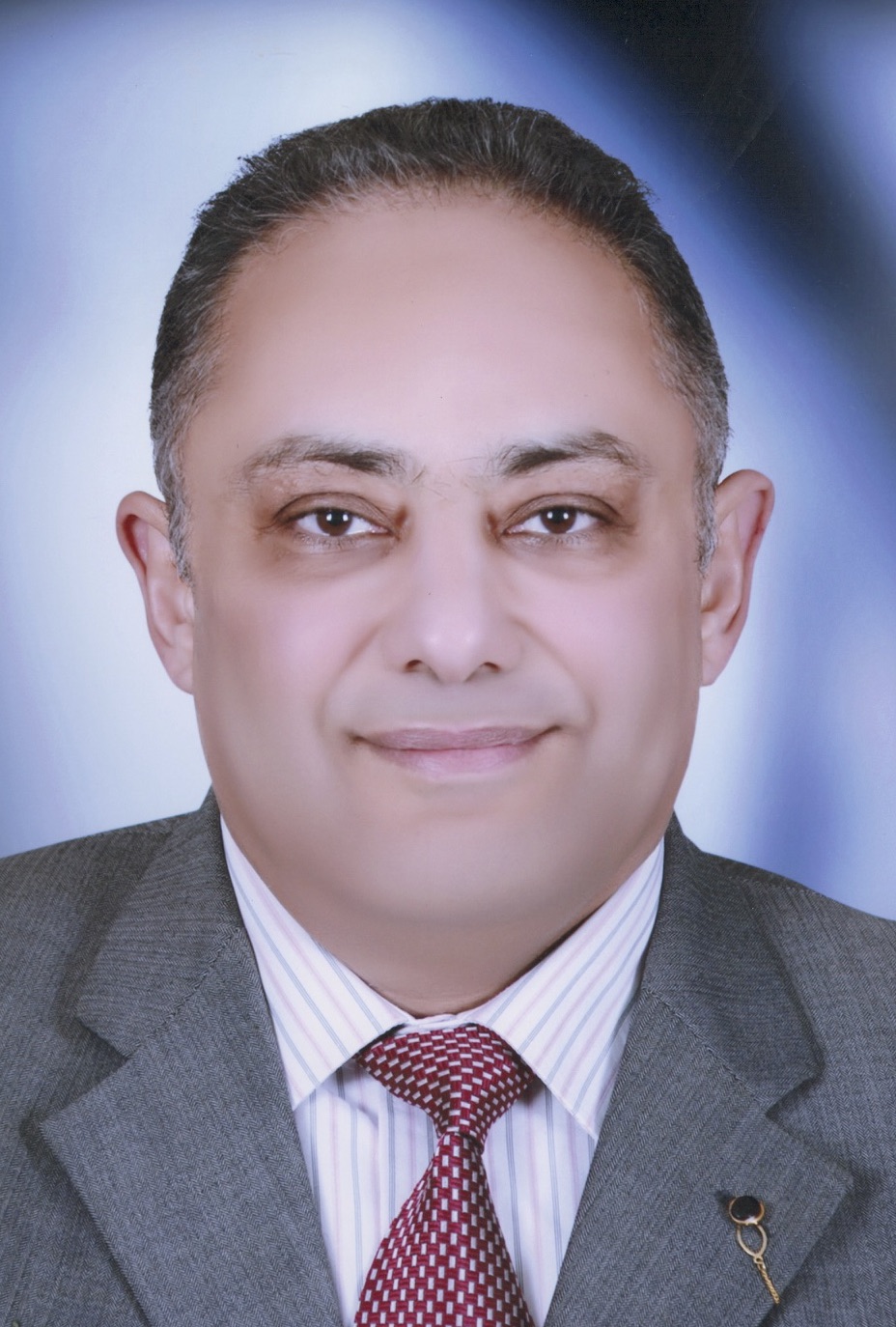


mohamed_abdelwanees

Mohamed El-Sayed Abdel-Wanis Mohamed

Professor - Prof of Orthopedic Surgery

Faculty of medicine

Address: 46 Kornich ALNILE

3

Like
Minimal curettage, multiple drilling, and continuous decompression through a cannulated screw for treatment of calcaneal simple bone cysts in children.
This report concerns a series of 12 patients with simple bone cysts of the calcaneus, who were treated between 1988 and 2000 by a minimal surgical intervention of curettage, multiple drilling and continuous decompression through insertion of a cannulated screw. Inserted screws were made of titanium in 8 cases and ceramics in 4 cases. The mean operative time was 58.8 ... Read more

2002 | Keywords osteosarcoma joint preserves,
The natural limb is best: joint preservation and reconstruction by distraction osteogenesis for high-grade juxta-articular osteosarcomas.
This paper introduces an innovative technique of highly conservative limb-saving surgery for juxta-articular osteosarcoma. This technique consists of marginal tumour excision, joint preservation and reconstruction by distraction osteogenesis. Ten patients, with a mean age of 19.5 years and high-grade osteosarcoma, underwent this procedure. The distal femur and proximal tibia were affected in five patients each. After effective pre-operative chemotherapy, the ... Read more

2002 | Keywords
Thyroid cancer spinal metastases: report on 25 operations in 14 patients
This study reviewed 14 patients with thyroid cancer spinal metastases treated between December 1984 and July 2000. In total the 14 patients had undergone 25 operations (average 1.8 operations/patient). The operations were at the thoracic (15), cervical (7) and lumbar (3) levels and operations included piecemeal excision (14), total en bloc spondylectomy (7), posterior decompression and stabilization (2), posterior decompression ... Read more

Osteosarcoma around the knee. Intraepiphyseal excision and biological reconstruction with distraction osteogenesis
n 11 patients juxta-articular osteosarcoma around the knee was treated by intraepiphyseal excision of the tumour and reconstruction of the bone defect by distraction osteogenesis. Preoperative and postoperative chemotherapy was given to eight patients with high-grade tumours. The articular cartilage of the epiphysis and a maximum of healthy soft tissues were preserved. Distraction osteogenesis was then carried out. The mean ... Read more

Deformity correction followed by lengthening with the Ilizarov method.
Deformity combined with shortening of 18 lower limb segments of 17 patients was treated with the Ilizarov method. Limb lengthening was done at the same treatment (monofocal treatment) or a separate osteotomy (bifocal treatment) was done after acute or gradual correction of the deformity using the Ilizarov hinge system. The external fixation time, amount of deformity correction, length gained, and ... Read more

2002 | Keywords Melatonin Fibrous dysplasia,
Melatonin deficiency and fibrous dysplasia: might a relation exist?
Fibrous dysplasia of bone might be monostotic, polystotic, or occurs as a part of McCune-Albright syndrome and Jaffe-Lichtenstein syndrome. Activating mutations of GNAS1 gene was identified in patients with fibrous dysplasia. However, fibrous dysplasia might occur in the absence of these mutations and fibrous dysplastic tissue was produced in vitro by the effects of excess exogenous cAMP on human osteogenic ... Read more

2002 | Keywords
The role of neurofibromin and melatonin in pathogenesis of pseudarthrosis after spinal fusion for neurofibromatous scoliosis.
We might hypothesize that the high rate of pseudarthrosis after spinal fusion for neurofibromatous scoliosis is related to two factors: the absence of neurofibromin and melatonin deficiency. Loss of the up-regulation of neurofibromin during the healing process might abolish the bone-forming effects mediated through platelet-derived growth factor (PDGF) and transforming growth factor (TGF) beta1. The absence of neurofibromin might cause ... Read more

Hypophosphatemic osteomalacia in neurofibromatosis 1: hypotheses for pathogenesis and higher incidence of spinal deformity.
Osteomalacia is rarely encountered in association with neurofibromatosis 1, characterized by phosphate loss in the urine and its pathogenesis is still unknown. Incidence of spinal deformities in cases of neurofibromatosis 1 associated with osteomalacia seems to be high. Spinal deformities are unlikely to be due to osteomalacia itself. Melatonin deficiency was proposed to be present in cases of neurofibromatosis 1 ... Read more

2001 | Keywords Neurofibtomatosis Scoliosis,
Aetiology of spinal deformities in neurofibromatosis 1: New hypotheses.
Neurofibromatosis 1 is a common heritable disorder. The gene causing neurofibromatosis 1 had been recognized and the protein encoded by this gene, neurofibromin, was supposed to play a role in development of various tissues. Neurofibromin was found to have GTP-ase (GAP) domain against small p21 ras. IQGAP1 is another human ras-specific GAP that was found to have calmodulin-binding motifs. Spinal ... Read more

2001 | Keywords Tumor cell contamination,
Tumor Growth Potential after Tumoral and Instrumental Contamination: An in Vivo Comparative Study of T-Saw, Gigli Saw and Scalpel.
In the field of spinal tumors, intralesional tumor cutting is sometimes inevitable. The purposeof this study was to compare the potential for tumor growth after intralesional cutting by T-saw, Gigli saw and scalpel.Tumorswereprepared by subcutaneous injection of human HT 1080fibrosarcoma cells innude mice, and cut with a T-saw, Gigli saworscalpel. A 3-cm wound was created in the skin on the ... Read more