The study of spectral gamma-ray logs plays a critical role in understanding the lithofacies and depositional environments of subsurface geologic formations. This research focuses on the Lam Member within the Habban oilfield, located in the Sab’atayn Basin, Yemen. By integrating spectral gamma-ray data with core analysis and other geological datasets, this study aims to provide insights into the stratigraphic distribution, mineral composition, and depositional processes of the Lam Member. Key parameters, such as thorium, uranium, and potassium concentrations, recorded from two wells were analyzed to infer sedimentary characteristics and environmental conditions. The results reveal significant lithologic heterogeneity and suggest a complex interplay of fluvial and marine depositional systems, enhancing the understanding of the basin petroleum potential. The Lam Member comprises interbedded carbonate (dolomite) and claystone with intercalated sandstone. Spectral gamma-ray results indicate that clay minerals primarily consist of mixed-layer clays, chlorite, kaolinite, and minor illite. Based on the Th/U ratio (less than 2), the depositional environment is identified as marine.
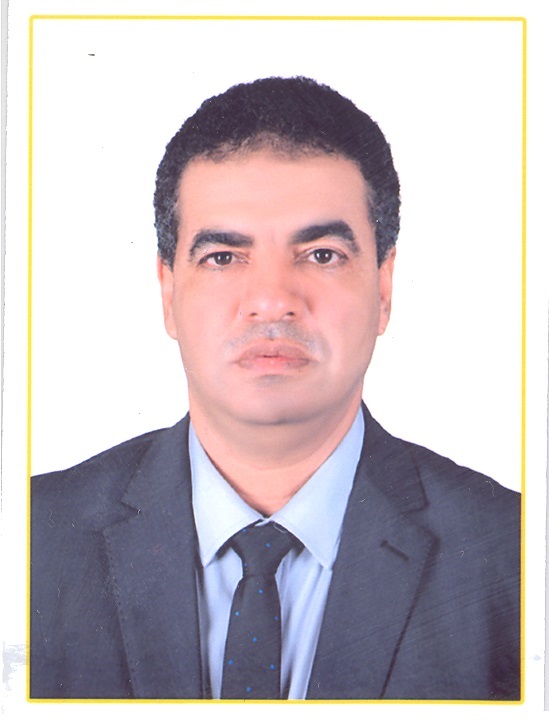
Prof.Dr. Abelbaset Mohamed Abudeif
Professor - Professor of applied geophysics and Ex. vice dean of Faculty of Science for Community and Environmental Development , Ex. Head of geology DepartmentSohag University, Sohag, Egypt.
Faculty of science
Address: 33 Belal Ben Rabah, Nacer City, Sohag, Egypt