This study employs high-resolution magnetic surveying to prospect buried archaeological features, primarily Ptolemaic tombs, within the archaeological hill at Al Dyabat, near Akhmim City, Sohag, Egypt. Despite its historical importance, the site remains largely uninvestigated, presenting a valuable opportunity for new archaeological discoveries. A dual-sensor Overhauser magnetometer was used to conduct a magnetic survey over an area of approximately 2500 m², aiming to detect subsurface anomalies indicative of tomb structures. Advanced data processing techniques, including high-pass filtering, vertical derivatives, analytic signal transformation, Source Parameter Imaging (SPI), and Euler Deconvolution, were applied. The results revealed several shallow magnetic anomalies, ranging in shape from circular to elongated which were interpreted as ninteen potential tombs and associated mudbrick enclosures. These features were identified at depths between 0.5 and 1.5 meters, as outcomed by both SPI and Euler depth solutions. The study demonstrates the effectiveness of jointing magnetic methods in non-invasive archaeological prospection and provides essential guidance for future targeted excavations.
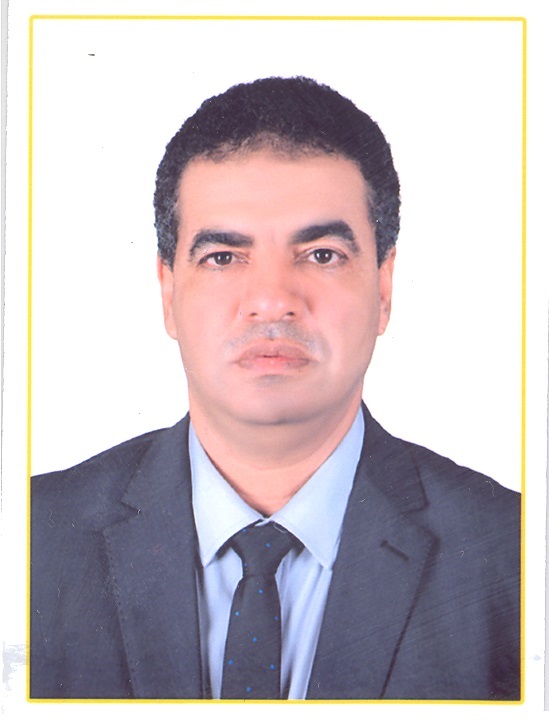
Prof.Dr. Abelbaset Mohamed Abudeif
Professor - Professor of applied geophysics and Ex. vice dean of Faculty of Science for Community and Environmental Development , Ex. Head of geology DepartmentSohag University, Sohag, Egypt.
Faculty of science
Address: 33 Belal Ben Rabah, Nacer City, Sohag, Egypt