

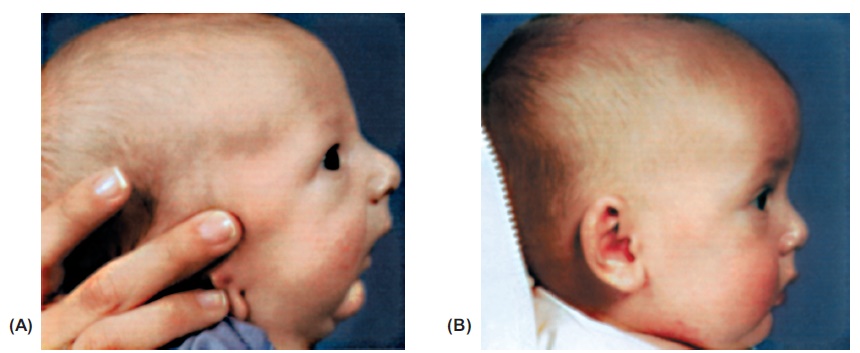
Small lower jaw may be a reason of upper respiratory obstruction in neonates. Neonatal upper airway obstruction is a life threatening condition often requiring urgent interference. Typically, the treating neonatologist first stabilizes the patient’s airway via intubation, a nasal airway or proper patient positioning. Although the tracheostomy is a life-saving procedure in these circumstances, it is associated with numerous complications. Distraction osteogenesis (DOG) offers an alternative to a tracheostomy for newborns with Pierre Robin sequence, Stickler syndrome, Treacher Collins syndrome, Nager syndrome, and other craniofacial deformities. The study included 9 patients had micrognathia and upper respiratory obstruction who were managed at Mattel’s children hospital at UCLA over the period from 2006 to 2010, 4 males and 5 females, all were full term babies except for one who was born at 33 weeks. All patients had distraction done in the first two months of life. The diagnosis of airway obstruction was based on oxygen desaturations and duskiness and apnea on feeding. Tongue base collapse was confirmed as the primary site of obstruction by flexible nasolaryngoscopy and direct laryngobronchoscopy and other airway lesions were excluded. In summary, bilateral distraction osteogenesis is an effective technique of elongating the micrognathic mandibles. Additional studies are indicated to study the long-term outcomes in different diagnostic subgroups of micrognathia with respiratory obstruction.