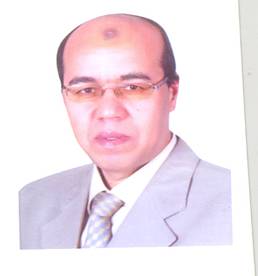
| الاسم بالكامل | sabry_hussien |
|---|---|
| البريد الإلكتروني | sabry_hussien@med.sohag.edu.eg |
| النوع | ذكر |
| الكلية | كلية الطب |
| الدرجة الوظيفية | استاذ |
| العنوان | جامعة سوهاج - كلية الطب - قسم النساء والتوليد |
| التخصص العام | النساء والتوليد |
|---|---|
| التخصص الدقيق | النساء والتوليد |
| رقم الهاتف | |
|---|---|
| Google Scholar | |
| Linked | |
| Research Gate | |
| EKP بنك المعرفة المصري |
PERSONAL DATA:
Sabri Mahmoud Mohamed Hussein
Professor of Obstetrics & Gynecology
Obstetrics & Gynecology department, Sohag Faculty of Medicine,
Sohag University, Sohag , Egypt.
Tel: 002 093 2106011,
Mobile: 002 01000366262
Email : sabrisohag112@gmail.com
Personal Information:
Surname : Hussein
Sex : Male
Date of Birth : 1-12-1960
Marital Status : Married with four kids
Nationality : Egyptian.
State of Health : Excellent physical and mental health
Military Service : Completed national military service .
Current Position :
Professor of Obstetrics & Gynecology , Sohag University , Egypt
EDUCATION:
1977-1984: Assuit Faculty of Medicine
Bachelor of Medicine and Bachelor of Surgery , Very Good with Honor
September 1984 , Assuit University, Egypt
1985-1988: Obstetrics & Gynecology department, Assuit University Hospital
Master degree of Obstetrics & Gynecology, January 1989 , Assuit University, Egypt.
1995: M D. in Obstetrics & Gynecology, Assuit Faculty of Medicine, Egypt , February 1995 .
1995 : Sohag faculty of medicine , Egypt .
PREVIOUS APPOINTMENTS
March 1985- Feb. 1986 : House Officer
Assuit University Hospital, Egypt: 4 months General Surgery, 2 months Urology, 2 months Obstetrics & Gynecology, 2 months Internal medicine and 2 months Pediatric.
March 1986-Feb. 1989: Resident (Registrar)
At Assuit University Obstetrics & Gynecology department, Egypt
April 1989- February 1995: Assistant Lecturer
At Obstetrics & Gynecology department, assuit Faculty of Medicine, Egypt.
February 1995- march 2000 : Lecturer of Obstetrics & Gynecology
At Obstetrics & Gynecology department, Sohag Faculty of Medicine, South Valley University, Egypt.
march 2000 – until June 2005: Assistant Professor of Obstetrics & Gynecology.
At Obstetrics & Gynecology department, Sohag Faculty of Medicine, Sohag University, Egypt.
June 2005 : Professor of obstetrics and gynecology ,
Sohag Faculty of Medicine, Sohag University, Egypt.
PUPLICATIONS :
M.Sc. Thesis 1989 :
Comparative study between T CU 380 A and T CU 380 S IUCD
دراسة مقارنة بين نوعين من الواقى الرحمى النحاسي
تحت اشراف الاستاذ الدكتور : ممدوح شعبان و الدكتور : اسماعيل محمد حسن , طب اسيوط
M.D. Thesis 1995 :
The role of TVS in induction of ovulation in infertile patient .
دور الموجات فوق الصوتية المهبلية فى الحث على التبوبيض فى حالات العقم
تحت اشراف الاستاذ الدكتور : على محمود عبد العليم و الاستاذ الدكتور : محمد حسين مكارم و الدكتور : هانى محمود عبد العليم , طب اسيوط
puplished papers :
1-Sabri M. Mohamed & Salah R. Ahmed: The effect of salpingectomy versus conservative treatment of tubal pregnancy on subsequent fertility; The J. of Egyptian Society of OB/GYN vol.27 no.7, 8&9 2001(607-614).
Abstract : Ectopic pregnancy is a common, gynecologic, acute abdominal condition that remains life threatening; in fact, it is the leading cause of maternal death in early pregnancy . To date, the incidence of ectopic pregnancy has increased from 0.5% in 1970 to 2% . Approximately 98% of ectopic pregnancies occur in the fallopian tube ; however, blastocysts can also implant in the ovary, the cornual region, a hysterectomy scar, the abdomen, or the cervix. The treatment options for tubal pregnancy include expectant management, medical treatment and surgery (conducted via laparotomy or laparoscopy). More than three-quarters of women who experience ectopic pregnancy should to be treated surgically . Currently, laparoscopic surgery is the most preferred treatment option.There are two types of surgical procedure for tubal pregnancy: radical (salpingectomy) and conservative (typically salpingotomy). The subsequent fertility after salpingectomy and salpingotomy are similar in the long term.
2-Sabri M. Mohamed & Salah R. Ahmed & Mostafa M. Sedera: The role of ondanestron in management of refractory hyperemesis gravidarum; South Valley Med. J. Vol. (5), No. (1), 2004
Abstract : ondansteron treatment appears to be safe and reasonable therapeutic alternative for intractable hyperemesis gravidarum . however , large sized study is needed to confirm our finding .
3-Salah R. Ahmed & Sabri M. Mohamed: Pregnancy following treatment of prolactinoma with gonadotropins and bromocriptin. Poster presentation in the annual conference of The Egyptian Fertility &Sterility Society (Update in Reproductive Technology) September 2-3, 2004 Marriot Hotel Cairo, Egypt.
Abstract :
OBJECTIVE: To evaluate the long-term effects of pregnancy and bromocriptine treatment on prolactin-secreting pituitary tumors in women undergoing infertility treatment for prolactinomas.
METHODS: The records of 7 patients with prolactinomas were reviewed. Data regarding age, prepregnancy baseline and postpartum serum prolactin levels, and radiologic studies including CT or MRI were assessed. 6 patients were treated with bromocriptine before achieving pregnancy. Bromocriptine therapy was resumed after delivery for the duration of 1 to 4 years.
RESULTS: 40% of pregnancies did not affect the size of prolactinomas, 35% of pregnancies showed a decrease in size of prolactinomas or radiologic evidence of resolution of the tumor and 25% of pregnancies demonstrated radiologic increase in the size of prolactinomas.
CONCLUSIONS: It is safe for patients with prolactinomas to achieve pregnancy following bromocriptine treatment. Pregnancy may lead to a slight decrease in the size of prolactinomas, increase in size , no change and in some cases , complete resolution .
4- THE ROLE OF HELICOBACTER PYLORI IN HYPEREMESIS GRAVIDARUM
Sayed. A .M Taha, Sabri Mahmoud Ahmad, Ahmad Tag Eldin
Abdel Hafeez and Mohammed Nour El-Deen Mohammed
Obstetrics and Gynecology Department, Sohag Faculty of Medicine,
South Valley University.
A abstract:
Introduction: There are many unanswered questions regarding the etiology. course.
epidemiological features and optimal management of hyper emesis gravidarum. Several theories proposed (including allergic. Neurotic and hormonal theories) but none of them is completely satisfactory. An association between chronic infection with Helicobacter pylori
and hyper emesis gravidarum has been repeatedly considered.
The aim or the work: is to assess the possible relation Of Helicobacter pylori infection to hyper emesis gravidarum in our population.
Methodology: This study was carried out in, Obstetrics and Gynecology Department, Sohag University Hospital, during the period from October 2002 to October 2003. It included 80 pregnant women during the first 1 5th weeks of their ongoing pregnancy. They represented two groups Of women: a) Group I (patients): Included 40 pregnant women with hyper emesis gravidarum and fulfilling the inclusion criteria of the study. b) Group Il (controls): Included 40 healthy women. They have no symptoms Of hyper emesis gravidarum. All cases and controls were subjected to the followings: (I) Full history taking.
clinical examination, trans-abdominal pelvic ultrasonography and urine analysis for ketone bodies. (2) 5 ml Of venous blood samples were collected, centrifuged after coagulation, to separate the sera which "ere kept frozen at -200C till all of the 80 samples were collected, then the sera were tested (quantitatively) for Helicobacter pylori lgG (Competitive immunoassay), by the IMMULITE Analyzer, using kits manufactured by Diagnostic Products Corporation (DPO, Los Angeles, CA 90045-5597, USA. The two groups were
compared to each other clinically and serologically using X2 test together with calculation o f the odd ratio and T test with calculation of the 95 % confidence interval of the difference in means .
Results: There were no significant differences between the two groups as regard maternal age, gestational age and the number of previous deliveries or abortions . 67.5% of hyper emesis group were primigravidae & while 42.5% only Of the control groups were primigravidae (p<O.05 and odd ratio 2.81). A positive titer Of Helicobacter pylori lgG antibodies Was detected in 23 Out Of 40 patients in the hyperemesis group (58.9%) versus 17 out of 40 control versus (42.5%). Although difference was not statistically significant (P>O.OS and Odd ratio I. 83), eases With high positive titer were significantly more common in the hyper emesis group than the controls, 33.3% versus I ()0/0, and Odd ratio Of 4.33). S cases Of the hyperemesis group have sever symptoms. These cases were common (although statistically insignificant) among those with high positive lgG titer. 6 out of 13 (46.2%) compared to cases with low positive titer 2 cases out of None of the Cases with negative titer ( 17cases) has severe symptoms. Also the mean lgG titer was significantly higher in the hyperemesis group than the controls (2.46 2.06 u/ml) that ranged from 0.4 — 8.0 u/ml) versus 1.52 0.78 u/ml, with range from 0.5-3.0 u/ml. (P<O.5 and the 95% confidence interval for difference in means ranged from 0.26 - I .62 u/ml).
Conclusion: chronic helicobacter pylori infection may be a significant participant in the etiology of hyper emesis gravidarum especially sever It should as a possible exacerbating factor in refractory cases of hyper emesis. Further randomized prospective trials are needed for pregnant women with hyper emesis gravidarum to study effect of pre-pregnancy treatment of helicobacter pylori and showing the effectiveness of the pharmo- therapeutic cure during pregnancy on the incidence and course of hyper emesis.
Keywords: emesis gravidarum- hyper emesis- helicobacter pylori
5-decoding the proteome of IVF ovarian follicular fluid for women over 35 years
Sabri.M.Mohamed
J Clin Anal Med 2016 ; 7 (1):60-4
Aim: The study of follicular fluid using proteomic techniques could provide a useful tool for understanding follicular fluid components and their effect on pregnancy outcome. The aim of the study is to identify and catalog follicular fluid proteins in women 35 years Of age or Older. Material and Method: Follicular fluid was collected from 21 couples, of which 1 1 couples achieved successful pregnancy and 10 couples failed to get pregnant. Samples were analyzed by multidimensional chromatography coupled with in-line nano-spray ionization mass spectrometry on an L TQ XL ion trap mass spectrometer. We used the Biomarker Analysis Program from PDQuest software to identify protein constituents in pregnant and non-pregnant groups. Results In total, 1024 protein specimens were identified. The proteins identified were consistent throughout the experiment and within each of the analyzed specimens.
Discussion: A compiled listing of follicular fluid proteins could be a potentialstarting point for the identification and evaluation of important proteins in- volved in the development of oocytes; the results of our study may fill a noticeable knowledge-gap in the understanding of follicular fluid proteome.
6-systemic methotrexate treatment in interstitial ectopic pregnancy , south vally university , sohag , vol 8 no.2 July 2004
Abstract : 5 cases diagnosed as interstitial ectopic pregnancy , methotrexate administration for 5 days and follow up by U/S and HCG serum level with clinical data .
Results : good success with complete resolution without maternal morbidity or mortality
Conclusion : methotrexate is a good alternative for surgical intervention
7-does uterine arterial Doppler flow velocity measurement predict the likelihood of pregnancy during IVF and ICSI program ,the Egyptian journal of fertility and sterility , vol 5 , no.1 year 2001
8-expectant VS active management of functional overian cyst ,south vally medical journal , January 2002
9-laparoscopic assisted vaginal hysteroscopy VS total laparoscopic hysteroscopy and laparoscopic supracervical hyterescopy : aprospective observational study , south vally medical journal , vol 8 , no.2 , july 2004
10-intrathecal fentanyl as a sole narcotic for analgesia during labor , is it satisfactory ? , official journal of Egyptian society of intensive care and traumatology , vol 7 , no.2 , September 2002
11-the disposition of propofol in women undergoing elective CS , official journal of Egyptian society of intensive care and traumatology , vol 8 , no.2 , September 2003
Conferences attended :
1- The First international annual conference of obstetrics and gynecology department Al-Azhar University on "Women's and fetal health, new advances and bioethics" may 13 —14tb 1999 Marriott Hotel, Cairo.
2— The international annual conference of the Egyptian Fertility and Sterility Society, titled "New Horizons in Infertility Management". September; 24-25, 1999, Cairo , Egypt.
3- The international conference Of the department Of OB/GYN„ Faculty Of Medicine, Assiut University, titled "Women's Health and Next Century", December; 1 q- 4th, 1999, Aswan, Egypt.
5- The 50 international annual conference of the Egyptian Fertility and Sterility Society, titled "Reproductive Medicine in the New Millennium", September; 21"-22"', 2000, Cairo, Egypt.
5- The International Fertility Center & Egyptian ICSI Center, Titled "Fertility Management" The Road to Successes Chairman", November, 2001, Alexandria, Egypt.
6- The 7th international annual conference of the Egyptian Fertility and Sterility Society, titled "Reproductive Technology and New Challenges", September; 6th- 7th, 2001, Cairo, Egypt.
7- The 4th international annual conference Of the International Fertility Center & Egyptian ICSI Center, Titled "New Frontiers in Reproductive Health", November; 1st- 2nd, 2001, Alexandria, Egypt.
8- The 3rd international conference of the department of OB./GY Faculty of Medicine, Assiut University, Titled "Challenges in Women Health", February; 6th- 8th, 2002, Aswan, Egypt.
9- The Joint Annual Conference Of The Egyptian Society of Gynecology and Obsterics & The Egyptian Fertility Care Society, Marrioot Hotel Jun 6th 2002.
I0- The Egyptian Fertility and Sterility Society on "Update in Reproductive Technology" in September 5th — 6th 2002, Cairo- Egypt.
11- Unmet Needs in Women's Health in Upper Egypt, the 4th International Conference of the Department of 0b/GYN„ Sohag Faculty Of Medicine 22-24 January, 2003, El-Zohour Island, Sohag, Egypt.
12- The Egyptian Fertility and Sterility Society on "Update Management Of Infertility" in assuit University 6 March 2003.
13- The 10th Annual Scientific Meeting Mount-Lebanon: Jounieh-Kaslike Amtelias, December 10-13, 2003 .The Annual Joint conference Egyptian Society of Gynecology and Obstetrics Department of OB. & GYN., South Valley University Reproductive Health Challenges In Upper Egypt, In Karamman Island, Sohag, 1-3 December, 2004.
14-the 1st annual conference of obstetrics and gynecology Qena university 2013
15-the 1st upper Egypt conference of obstetrics and gynecology , luxor , Egypt 2017
16-the 2nd upper Egypt conference of obstetrics and gynecology , hurghada , Egypt 2018
Presentations :
1-Sabri.M.Mohamed
Ovarian hyper stimulation syndrome , women's health 1999 , aswan , Egypt , assuit university
2-Sabri.M.Mohamed
Update management of chronic unovulation , the 4th conference of OB/GYN sohag 2003 ( unmet needs in women's health in upper Egypt .
3-Sabri.M.Mohamed
The use of PGs in gynecological practice , the annual scientific conference of sohag faculty of medicine , sohag , Egypt .
4-Sabri.M.Mohamed
Omission VS commission of instrumental delivery , challenges in women's health , Luxor , Egypt , assuit university 2015 .
5-Sabri.M.Mohamed
Update management of abnormal uterine bleeding , Apex – multiapex pharma meeting , OB/GYN department Sohag university 2017
6-Sabri.M.Mohamed
Placenta previa is a real challenge , OB/GYN department , sohag university 2018
7-Sabri.M.Mohamed
Ovarian drilling in PCOD , women's health in upper Egypt , the reality and aspiration hurghada , Egypt .
8- Sabri.M.Mohamed
Role of transvaginal U/S in infertile couple
OB/GYN department , sohag university .
9-intersex
10-antepartum hemorrhage
11-CS
12-Antepartum fetal well-being
COURSES ATTENDED :
Thesis supervision :
1-study of the age of menarche and menopause in sohag governorate M.Sc thesis accepted 1996
2-study of the value of clinical examination , U/S , E2 level for diagnosis of ovulation M.Sc thesis accepted 1996
3-management of abnormal uterine bleeding in IUCD user , M.Sc accepted 1997
4-comapritive study between epidural and intrathecal narcotics for labor analgesia , M.Sc thesis accepted 1999
5-study of the fetal biophysical profile and Doppler indices in post-term pregnancy , M.Sc thesis accepted 2000
6-the role of Doppler U/S on the uterine and ovarian arteries for prediction of the results of IUI , IVF and ICSI , M.D thesis accepted 2000
7-female circumcision in sohag governorate , the magnitude of the problem and health complication , M.Sc thesis accepted 2001
8-comparitive study between hysterectomy ( abdominal and vaginal ) and laparoscopic hysteroscopy M.D thesis accepted 2004
9-the role of H.pylori in hyperemesis gravidarum M.Sc thesis accepted 2004
10-the use of vaginal misoprostol before hysteroscopy in postmenopausal bleeding M.Sc thesis accepted 2005
11-comparitive study between nitroglycerin patch and retodrine HCL ( intravenous drip ) for tocolysis in preterm labor M.Sc thesis accepted 2007
12-uses of antiPGs in gynecology and obestitrics ( evidence based approaches ) M.Sc thesis accepted 2010
13-the role of Doppler U/S examination in high risk pregnancy M.Sc thesis accepted 2010
14-The value of PTEN , PCNA and B-catenin to differentiate between endometrial hyperplasia and endometrial carcinoma M.D thesis accepted 2012
15-maternal and fetal outcome of placenta previa in sohag university of hospital , prospective and retrospective study M.Sc thesis accepted 2015
16-proteomic analysis of IVF ovarian follicular fluid for women over 35 years : a novel predictor of success M.D thesis accepted 2016
17-the use of radiofrequency ablation of symptomatic myoma ongoing M.D thesis Start at 2018
18-gestational trophoblastic disease , updated management , systematic review M.Sc thesis accepted 2018
Refree for the following thesis:
1-review article on fetal Echocardiography M.Sc thesis 2011
2-intrauterine growth restriction M.Sc thesis 2009
3-retained placenta review in literature M.Sc thesis 2008
4-the effect of demographics , referral system and clinical picture at presentation on the rate and outcome of CS at the women's health center , assuit university M.SC thesis2009
5-review in literature in induction of labor M.Sc thesis 2008
6-CS evidence based approach M,Sc thesis 2009
7-evidence based management of preclamsia , sohag university M.Sc thesis
2008
جميع البيانات و المستندات الموجوده لكل موقع من مواقع الاعضاء تقع صحتها قانونيا و أدبيا على العضو نفسه