
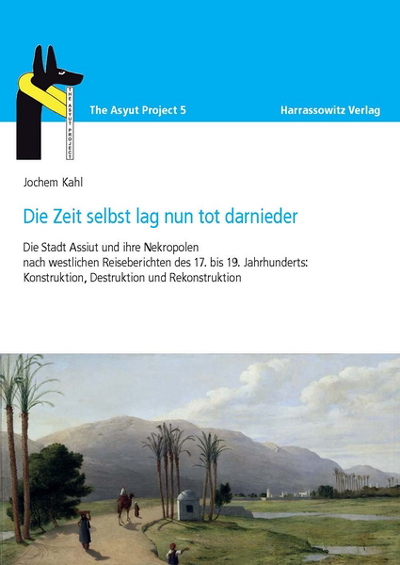
Assiut in Middle Egypt was one of the most important Egyptian cities in Pharaonic times. As a central location and cultural center, it has been home to millennia of historically, historically and artistically valuable testimonies that shed light on the regional characteristics of the region. Before the first major excavations on Assiut mountain, the Gebel Assiut al-gharbi, which served as a necropolis, quarry, place for monasteries and hermitages, as well as a tourist destination and base for military, European and American travelers visited during the 17. until the 19th century the city and the mountain and recorded their impressions in travelogues. In his study, Jochem Kahl evaluates about 100 of these reports, including previously unpublished texts, and reconstructs the state and destruction of archaeological monuments during the 17th to 19th centuries based on the sources. In addition, Kahl impressively traces the image that the travelers of Assiut and its inhabitants made, and at the same time illustrates the effect that the city and Gebel Assiut al-gharbi had on their visitors.
Jochem Kahl, Die Zeit selbst lag nun tot darnieder: Die Stadt Assiut und ihre Nekropolen nach westlichen Reiseberichten des 17. bis 19. Jahrhunderts: Konstruktion, Destruktion und Rekonstruktion, The Asyut Project 5, Edited by Jochem Kahl, Ursula Verhoeven and Mahmoud El-Khadragy, Harrassowitz Verlag, Wiesbaden, 2013.