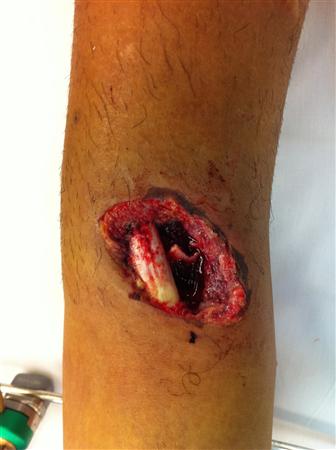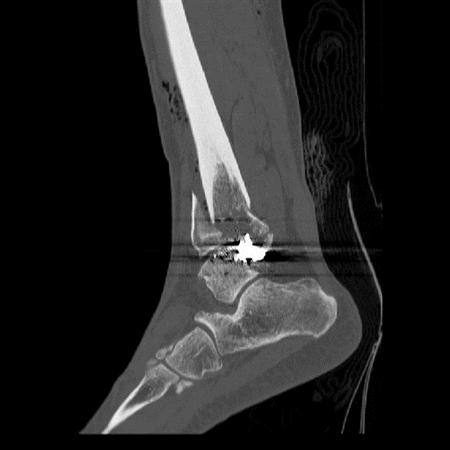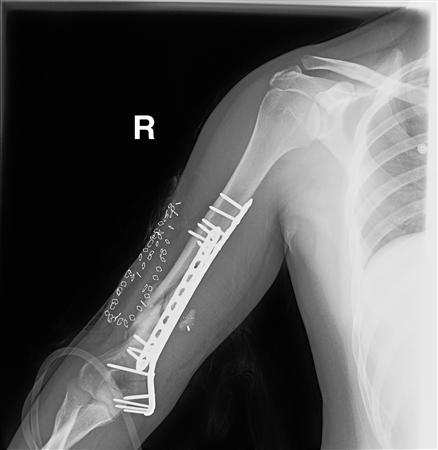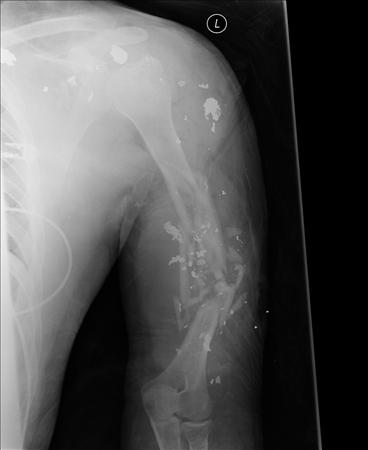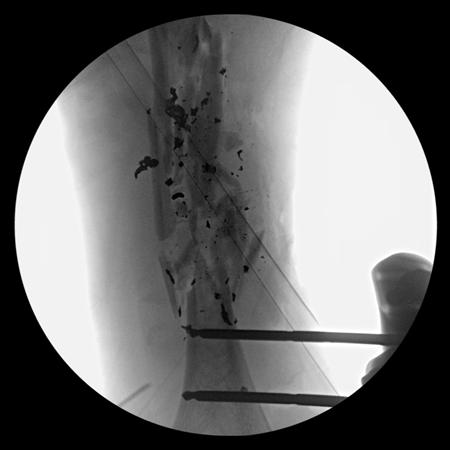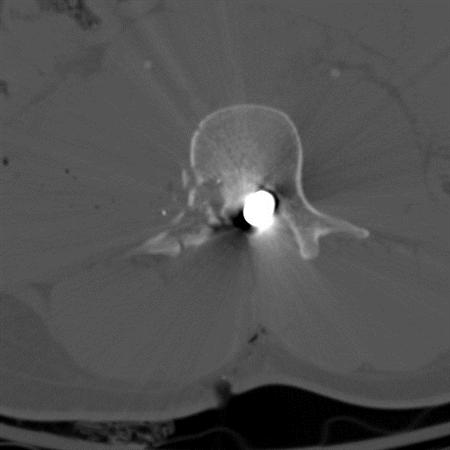

Gun shot woundsrepresent the second-leading cause of death for youth in United States.
Pathoanatomy
wounding capability of a bullet directly related to its kinetic energy
damage caused by
passage of missile
secondary shock wave
cavitation
exponential increase in injury with increasing velocity and efficient energy transfer
fractures may be caused even without direct impact
Associated conditions
lead intoxication (plumbism)
may be caused by intra-articular missile
systemic effects include
neurotoxicity
anemia
emesis
abdominal colic
GSW to hip and acetabulum are most commonly associated with bowel perforation > vascular injury > urogenital injuries
Classification
Low velocity
muzzle velocity <350 meters per second or < 2,000 feet per second
most handguns except for magnums
wounds comparable to Gustillo-Anderson Type I or II
Intermediate velocity
muzzle velocity 350-500 meters per second
shotgun blasts
highly variable depending on distance from target
can reflect wounding potential of high velocity firearms from close range (less than 21 feet) or multiple low velocity weapons
wound contamination/infection with close range injuries due to shotgun wadding
wounding potential depends on 3 factors
shot pattern
load (size of individual pellet)
distance from target
High velocity
muzzle velocity >600 meters per second or >2,000 feet per second
military (assault) and hunting rifles
wounds comparable to Gustillo-Anderson Type III regardless of size
high risk of infection
secondary to wide zone of injury and devitalized tissue
Presentation
Symptoms
pain, deformity
Physical exam
perform careful neurovascular exam
clinical suspicion for compartment syndrome
secondary to increased muscle edema from higher velocity wounds
examine and document all associated wounds
massive bone and soft tissue injuries occur even with low velocity weapons
Evaluation
Radiographs
obtain to identify bone involvement and/or fracture pattern
CT scan
identify potential intra-articular missile
detect hollow viscus injury that may communicate with fracture
high index of suspicion for pelvis or spine fractures given increased risk of associated bowel injury
Treatment General
Nonoperative
local wound care
indications
low velocity GSW with no bone involvement and clean wound edges
local wound care, tetanus +/- short course of oral antibiotics
indications
low-velocity injury with no bone involvement or non-operative fractures
technique
primary closure contraindicated
antibiotic use controversial but currently recommended if wound appears contaminated
Operative
treatment of other non-orthopedic injuries
for trans-abdominal trajectories, laparotomy takes precedence over arthrotomy
ORIF/external fixation
indications
unstable/operative fracture pattern in low-velocity gunshot injury
technique
treatment dictated by fracture characteristics similar to closed fracture without gunshot wound
stabilize extremity with associated vascular or nerve injuries
stabilize soft tissues in high velocity/high energy gunshot injuries
grossly contaminated/devitalized wounds managed with aggressive debridement per open fracture protocol
arthrotomy
indications
intra-articular missile
may lead to local inflammation, arthritis and lead intoxication (plumbism)
transabdominal GSW
GSW to Hand/Foot
Nonoperative
antibiotics
indications
gross contamination
joint penetration
extent of contamination unclear
Operative
surgical debridement +/- ORIF/external fixation
indications
articular involvement
unstable fractures
presentation 8 or more hours after injury
tendon involvement
superficial fragments in the palm or sole
GSW to Femur
Operative
intramedullary nailing
indications
diaphyseal femur fracture secondary to low-velocity gunshot wound
superficial wound debridement and immediate reamed nailing
similar union and infection rates to closed injuries
external fixation
indications
high-velocity gunshot wounds or close range shotgun blasts
stabilize soft tissues and debride aggressively
associated vascular injury
temporize extremity until amenable to intramedullary nailing
GSW to Spine
Nonoperative
broad spectrum IV antibiotics for 7-14 days
indications
gunshot wounds to the spine with associated perforated viscus
bullets which pass through the alimentary canal and cause spinal cord injuries do not require surgical removal of the bullet
Operative
surgical decompression and bullet fragment removal
indications
when a neurologic deficit is present that correlates with radiographic findings of neurologic compression
a retained bullet fragment within the spinal canal in patients with incomplete motor deficits is a relative indication for surgical excision of the fragment