
رسالة دكتوراه
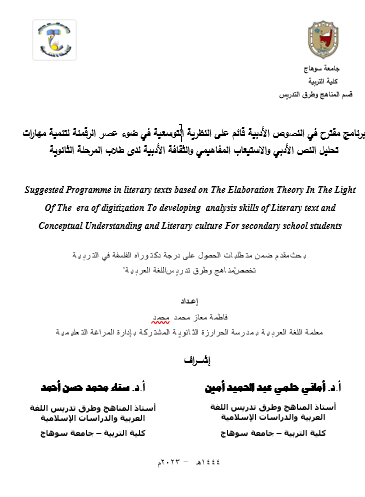
برنامج مقترح في النصوص الأدبية قائم على النظرية التوسعية في ضوء عصر الرقمنة لتنمية مهارات تحليل النص الأدبي والاستيعاب المفاهيمي والثقافة الأدبية لدى طلاب المرحلة الثانوية
Suggested Programme in literary texts based on The Elaboration Theory In The Light Of The era of digitization To developing analysis skills of Literary text and Conceptual Understanding and Literary culture For secondary school students
بحث مقدم ضمن متطلبات الحصول على درجة دكتوراه الفلسفة في التربية
تخصص "مناهج وطرق تدريس اللغة العربية"
إعــداد
فاطمة معاز محمد محمد
معلمة اللغة العربية بمدرسة الحرارزة الثانوية المشتركة بإدارة المراغة التعليمية
|
أ.د. أماني حلمي عبد الحميد أمين أستاذ المناهج وطرق تدريس اللغة العربية والدراسات الإسلامية كلية التربية – جامعة سوهاج |
|
أ.د. سناء محمد حسن أحمد أستاذ المناهج وطرق تدريس اللغة العربية والدراسات الإسلامية كلية التربية – جامعة سوهاج
|
إشــــراف
1444هـ - 2023م
مستخلص البحث
عنوان البحث: "برنامج مقترح في النصوص الأدبية قائم على النظرية التوسعية في ضوء عصر الرقمنة لتنمية مهارات تحليل النص الأدبي والاستيعاب المفاهيمي والثقافة الأدبية لدى طلاب المرحلة الثانوية "
الهدف من البحث: الكشف عن فاعلية برنامج مقترح في النصوص الأدبية قائم على النظرية التوسعية في ضوء عصر الرقمنة لتنمية مهارات تحليل النص الأدبي والاستيعاب المفاهيمي والثقافة الأدبية لدى طلاب الصف الأول الثانوي العام؛ حيث تحددت مشكلة البحث في تدني مستوى هؤلاء الطلاب في مهارات تحليل النصوص الأدبية والاستيعاب المفاهيمي لها وكذلك الثقافة الأدبية لدى طلاب الصف الأول الثانوي، وقصور الاهتمام بعنصري التوسع والتنظيم في تدريس النصوص الأدبية بهذا الصف.
منهج البحث وأدواته: تحقيقًا لأهداف البحث تم استخدام المنهج التجريبي ذي المجموعة الواحدة بالقياسين (قبلي وبعدي)، كما تم إعداد المواد التعليمية والأدوات البحثية المتمثلة في: قائمة مهارات تحليل النصوص الأدبية، وقائمة مهارات الاستيعاب المفاهيمي، وقائمة أبعاد الثقافة الأدبية، واختبار مهارات تحليل النصوص الأدبية، واختبار الاستيعاب المفاهيمي للنصوص الأدبية، ومقياس الثقافة الأدبية، ودليل المعلم وكتيب الطالب، وبعد التأكد من صدقها وثباتها، تم اختيار مجموعة البحث، حيث تكونت من خمسةٍ وخمسين طالبًا وطالبةً من مدرسة أولاد إسماعيل الثانوية المشتركة بإدارة المراغة التعليمية بمحافظة سوهاج، وقد تم تطبيق الأدوات قبليًا ثم تدريس موضوعات البرنامج للمجموعة التجريبية في الفصل الدراسي الثاني من العام 2021م/ 2022م، ثم طُبقت الأدوات بعديًا، وقد وضعت الباحثة في ضوء أهداف البحث فروضًا ثلاثة، ولاختبار صحتها والإجابة عن أسئلة البحث تمت معالجة البيانات إحصائيًا باستخدام اختبار "ت" لمعرفة دلالة الفروق، ومعادلة حساب الأثر (d) لكوهين Cohen، ومعادلة الكسب المعدل لبلاك (black).
نتائج البحث: كشفت نتائج البحث عن وجود فروق دالة إحصائيًا بين متوسطات درجات الطلاب في التطبيقين القبلي والبعدي لاختبار تحليل النص الأدبي، واختبار الاستيعاب المفاهيمي للنصوص الأدبية، ومقياس الثقافة الأدبية لصالح التطبيق البعدي.
أهم التوصيات: قدم البحث بعض التوصيات كان أبرزها التوصية بتوظيف التطبيقات التربوية للنظرية التوسعية في ضوء عصر الرقمنة في تدريس اللغة العربية وفروعها المختلفة وبالمراحل الدراسية المتعددة، وضرورة الاهتمام بإعادة هيكلة النظام التقويمي بالمرحلة الثانوية بشكلٍ يتناسب مع طبيعة مادة اللغة العربية وخاصةً النصوص الأدبية وبحيث ترتبط بالأهداف التدريسية لها وذلك من خلال التركيز على الأسئلة المقالية إضافةً إلى الشق الموضوعي، والتوصية بإعادة النظر في محتوى كتاب اللغة العربية للصف الأول الثانوي وأنشطته وتقويماته وطرق تبويب مضمونه بصورةٍ تتناسب مع التطور التقني المتَّبع.
Abstract of the research
Title of the research: Suggested Programme in literary texts based on The Elaboration Theory in the light of the era of digitization, to develop the skills of literary text analysis, conceptual comprehension and Literary culture for secondary school students.
The aim of the research: to reveal the effectiveness of a proposed Programme in literary texts based on the Elaboration Theory in the light of the era of digitization, to develop the skills of literary text analysis, conceptual comprehension and literary culture among first-year general secondary school students; Where the problem of the study was identified in the weak level of the first-year secondary school students in the skills of literary text analysis and their conceptual comprehension skills, as well as their weak literary culture and the lack of interest in the elements of expansion and organization in teaching literary texts.
Research methodology and tools: In order to achieve the objectives of the study, the one-group experimental approach was used with two measurements (pre and post), and educational materials and research tools were prepared: a list of literary text analysis skills, a list of conceptual comprehension skills, a list of dimensions of literary culture, a test of literary text analysis skills. Test of the conceptual comprehension of literary texts, the literary culture scale, the teacher's guide and the student's handbook. After confirming its validity and reliability, the study group consisted of fifty-five students from the Awlad Ismail Secondary School, The tools were applied beforehand, then the subjects of the program were taught to the experimental group in the second semester of the year 2021 / 2022 AD. Then the tools were applied dimensionally, and the researcher put three hypotheses, and to test their validity and answer the study questions, the data was processed statistically using the "T" test, and equations of Cohen's effect calculation, black's modified gain.
Results Of research: The research reveal that there is a statistically significant difference between the mean scores of students in the pre and post applications of the literary text analysis test, the conceptual comprehension of literary texts test, and the literary culture scale in favor of the post application.
The most important recommendations: the most prominent of which was the recommendation to employ the educational applications of the expansionist theory in the light of the era of digitization in teaching Arabic language and its various branches in the multiple educational stages, And the need to pay attention to restructuring the assessment system at the secondary stage in a way that is commensurate with the nature of the Arabic language subject especially literary texts, And recommending a reconsideration of the content of the Arabic language textbook for the first secondary grade, its activities, assessment, and ways to classify its content in a manner commensurate with the applied technical development.