

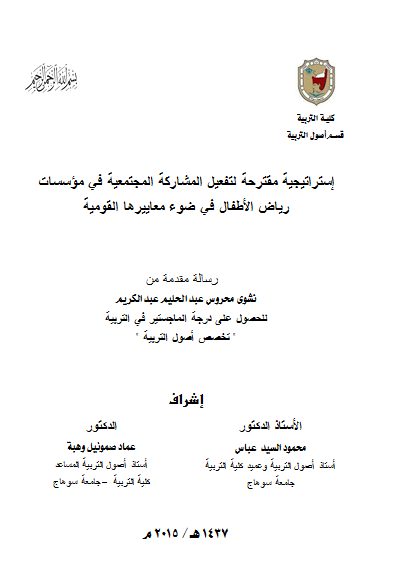
رسالة ماجستير
إستراتيجية مقترحة لتفعيل المشاركة المجتمعية في مؤسسات رياض الأطفال في ضوء معاييرها القومية
إعداد الباحثة
نشوى محروس عبد الحليم عبد الكريم
مصر - جامعة سوهاج
كلية التربية - قسم اصول التربية
تخصص أصول التربية
1437 هـ / 2015 م
تفضلوا المستخلص في المرفقات
وبالتوفيق
مستخلص الدراسة:
هدفت الدراسة الحالية إلى التعرف على طبيعة مؤسسات رياض الأطفال ودواعي ومظاهر الاهتمام بها، وتوضح العناصر الرئيسة للجودة في مؤسسات رياض الأطفال والمعايير القومية للجودة والاعتماد الخاصة بهذه المؤسسات، والتعرف على الملامح الأساسية للمشاركة المجتمعية في مؤسسات رياض الأطفال من خلال المعايير القومية للجودة والاعتماد وأهم المعوقات التي تحول دون تفعيلها في مصر، كما تهدف الدراسة الحالية إلى رصد واقع المشاركة المجتمعية في مؤسسات رياض الأطفال بجمهورية مصر العربية، واقتراح خطة إستراتيجية لتفعيل المشاركة المجتمعية في مؤسسات رياض الأطفال في ضوء المعايير القومية للجودة والاعتماد. ولتحقيق ذلك مرت الدراسة بمجموعة من الإجراءات تمثلت في التأهيل النظري ويشمل ما يلي :
- الإطار العام للدراسة.
- طبيعة مؤسسات رياض الأطفال في مصر ومظاهر الاهتمام بها (مفهومها – فلسفتها – أهدافها – مبررات إنشائها).
- الجودة في مرحلة رياض الأطفال ومعاييرها القومية للجودة والاعتماد في مصر (الفلسفة – الأهداف – العناصر – دواعي التطبيق ومعوقاته).
- ملامح المشاركة المجتمعية في مؤسسات رياض الأطفال من خلال المعايير القومية للجودة والاعتماد، وأهم معوقاتها في مصر.
وتلا ذلك تطبيق الدراسة الميدانية حيث تم إعداد أداة الدراسة الميدانية متمثلة في استبانة تهدف إلى الكشف عن واقع المشاركة المجتمعية في مؤسسات رياض الأطفال في ضوء المعايير القومية للجودة والاعتماد، وطبقت عل عينة قوامها (1000) فرد من مديرات ومعلمات رياض الأطفال وأولياء الأمور وأعضاء مجلس الأمناء في مؤسسات رياض الأطفال بمحافظات (القاهرة، الإسكندرية، الشرقية، أسيوط).
واستخدمت في ذلك المنهج الوصفي من خلال جمع الدراسات ذات الصلة بموضوع الدراسة وتحليلها والإفادة منها، واستخدام التحليل الإحصائي في الدراسة الميدانية، الذي يسهم في التعرف على واقع المشاركة المجتمعية في مؤسسات رياض الأطفال في ضوء المعايير القومية للجودة والاعتماد الخاصة بهذه المرحلة.
وتوصلت الدراسة إلى عدد من النتائج من أهمها: قصور المشاركة المجتمعية في مؤسسات رياض الأطفال، ويتضح ذلك في قصور المشاركة في وضع رؤية الروضة والمساعدة في تحقيقها، وتوفير مناخ تربوي فعال لها، وأظهرت نتائج الدراسة ضعف المشاركة المجتمعية في وضع رسالة الروضة والمساعدة في تحقيقها، وتدعيم القيادة الفعالة والحوكمة في الروضة، وفي تطوير مبنى الروضة وتوفير التجهيزات اللازمة، كما أن هناك ضعف في مشاركة المجتمع لتفعيل معايير المشاركة المجتمعية وضمان جودة الروضة وتحقيق المساءلة بها. بينما أشارت النتائج إلى ارتفاع مشاركة المجتمع من أجل تحقيق التنمية الشاملة لمعلمات الروضة من جهة، وتعاون معلمات الروضة في تحقيق المشاركة المجتمعية من جهة أخرى.
وبناءً على ذلك اقترحت الدراسة إستراتيجية لتفعيل المشاركة المجتمعية في مؤسسات رياض الأطفال في ضوء معاييرها القومية.
Abstract
The current study is aimed to recognize the nature of children care institutions and causes of interesting of it, also show the main factors of quality in children care institutions and the national standards of quality and approval roles of these institutions. Know the main aspects of community participating in children care institutions via national standards of quality and approval, and the most important hard which may be prevent its activating in Egypt.
The current study also aims to observing the reality of community participating in children care institutions in Arab republic of Egypt and proposing the strategically plans to activating the community participating in children care institutions in light of national standards of quality and approval, to chive that the current study was passed via a group of procedures is presented in the theoretical preparation which includes the following:-
- The general frame of the study.
- Nature of children care institutions and the interesting aspects of it (its concepts – philosophy – targets – elements – reasons for the application and its hardness)
- The quality in childhood care period and its national standards of quality and approval in Egypt (the philosophy – aims – elements or factors – reasons for applying and their hardness)
- Appearances of community participating in children care institutions via national standards of quality and approval and the most important difficulties of it in Egypt.
After that apply the field study whereas prepared a tool of field study is presented in questionnaire aims to discover the reality of community participating in children care institutions in light of national standards of quality and approval. Applied on a sample of (1000) items of female managers and teachers of children institutions and the responsible persons of children also the members of management council in children care institutions in governorates of (Cairo – Alexandria – Alsharkia – Assiut).
The descriptive method is used in that via collecting the relative studies, analyzing it, and using the statistical analyses in the field study which helps in knowing about the reality of community participation in children care institutions in light of national standards of quality and approval of this stage.
The study had reached to some of results, the most important of them are: shortage of community participation in children care institutions which appears in shortage of participating in put the vision of the institutions and help to achieve it, support providing of inactive Education environment for it.
The results of the study had show the weakness of community participation in draw the message of the institution and help to achieve it, supporting the active leaders and the governing in the institution, developing the building of the institution and providing it with necessary equipment, also there're weakness in community participation to apply the standards of community participation and granting the quality of institution and for setting responsible in it, whiles the results indicated to the raising of community participation in order to achieve the comprehensive development of she-teachers of the institutions in one side, and the cooperating of she-teachers in activating of community participation in the other side according that the study proposes an strategy to activate the community participation in children care institution in light of national standards.
ملخص الدراسة باللغة العربية:
مقدمة :
تعد تنمية ورعاية الطفولة المبكرة في الوقت الحالي مكوناً هاماً في تنمية الموارد البشرية في المجتمع، ولا تقع مسئولية تنمية الطفولة المبكرة بكليتها على مؤسسات رياض الأطفال بل ينبغي أن يشارك فيها المجتمع ككل، متمثلاً في الأسرة ووسائل الإعلام ومنظمات المجتمع المدني، وهذا التشارك لا يكون فحسب بإنشاء مؤسسات لرياض الأطفال، بل الأهم من ذلك المشاركة في صنع القرار التربوي والقيام بأدوار حقيقية لتنفيذه ومتابعته وتقييمه.
وقد قامت الحكومة حرصاً منها على إصلاح التعليم بوضع خطة إستراتيجية لإصلاح التعليم قبل الجامعي ترتكز على ضرورة مشاركة المجتمع المدني ورجال الأعمال وأولياء الأمور لتطوير مرحلة رياض الأطفال وتوفير تعليم ورعاية شاملة بها. فرفع كفاءة وتحسين جودة العملية التربوية والتعليمية بجميع مؤسسات رياض الأطفال تتطلب وضع وتطبيق آلية لزيادة مشاركة المجتمع المدني والقطاع الخاص في التوسع والجودة في مؤسسات رياض الأطفال.
وبالنظر إلى الجهود التي تبذلها الدولة من أجل التوسع في مؤسسات رياض الأطفال كماً وكيفاً وتقديم برامج وأنشطة عالية الجودة، إلا أنها مازالت دون مستوى الجودة وتعاني العديد من المشكلات. لذا أصبح من الاتجاهات الحتمية إجراء التواصل بين الجهات الرسمية والمجتمعية وتكاتف جهودهم للوصول إلى زيادة الاستيعاب وطرح مستوى عالٍ من الجودة وسد الفجوة بين الواقع الحالي والطموحات المستقبلية في مجال تنمية مؤسسات رياض الأطفال ورعاية الطفولة المبكرة.
مشكلة الدراسة :
تعد كفالة حق التربية والتعليم للطفل في مرحلة الطفولة المبكرة (4-6) سنوات قضية قومية يجب أن يقوم بها المجتمع ككل. فمؤسسات رياض الأطفال في أمس الحاجة إلى مزيد من الدعم المجتمعي كي نستطيع مواكبة الطموحات العالمية وتوفير حياة أفضل للطفل. خاصة مع اتساع التحديات التي تواجه هذه المؤسسات والتي تضاعفت مع تضاعف التعداد السكاني وانخفاض موارد الدولة وكثرة التزاماتها مما جعل هناك تناقصاً في الميزانية المخصصة للتعليم، وبالتالي انحسار ما هو محدد للإنفاق على مؤسسات رياض الأطفال كونها مرحلة غير إلزامية، ومن ثم العجز عن تلبية احتياجاتها ومتطلباتها.
ولهذا فالأمر يتطلب تفعيل دور المؤسسات المجتمعية في النهوض بالواقع الحالي، وخاصةً في ظل عدم قدرة الدولة على تحقيق الاستيعاب الكامل للأطفال والعجز في البنية التعليمية الأساسية وارتفاع كثافة الفصول وغياب الدور التدعيمي والرقابي والمحاسبي للمجتمع حول مساهمته في تحقيق معايير الجودة والاعتماد بها، كل ذلك يستدعي مشاركة ودعم مؤسسات المجتمع والحكومة في التصدي لهذه المشكلات وتقديم خدمات تربوية متميزة.
وبناءً عليه فالمشاركة المجتمعية في مؤسسات رياض الأطفال أصبحت مطلباً يهدف إلى مساعدة ودعم التربية في مرحلة رياض الأطفال، فهي لا تزال مساهمات تتسم بالضعف من حيث وعي أولياء الأمور والمجتمع بمفهوم وأهمية المشاركة ومن حيث تواصل رياض الأطفال مع المجتمع المحيط وفتح مجالات وآليات متجددة لتعزيز تقديم الجهود والخدمات بكافة أشكالها وأنماطها، لذلك لابد من وجود نظام وإجراءات إستراتيجية محددة لتفعيل المشاركة المجتمعية في مؤسسات رياض الأطفال وتحقيق المعايير القومية للجودة والاعتماد بها.
تساؤلات الدراسة :
1- ما طبيعة مؤسسات رياض الأطفال ومظاهر الاهتمام بها ؟
2- ما العناصر الرئيسة للجودة في مؤسسات رياض الأطفال والمعايير القومية للجودة والاعتماد بهذه المؤسسات ؟
3- ما الملامح الأساسية للمشاركة المجتمعية في مؤسسات رياض الأطفال، وأهم معوقاتها في مصر ؟
4- ما واقع المشاركة المجتمعية في مؤسسات رياض الأطفال في مصر ؟
5- ما الإستراتيجية المقترحة لتفعيل المشاركة المجتمعية في مؤسسات رياض الأطفال ؟
أهداف الدراسة
تتمثل أهداف الدراسة فيما يلي :
1- التعرف على طبيعة مؤسسات رياض الأطفال ومظاهر الاهتمام بها (مفهومها – نشأتها وتطورها – فلسفتها – أهدافها – أهميتها – وظائفها – مبررات إنشائها - أنواعها والجهات المسئولة عنها).
2- توضيح العناصر الرئيسة للجودة في مؤسسات رياض الأطفال والمعايير القومية للجودة والاعتماد الخاصة بهذه المؤسسات.
3- التعرف على الملامح الأساسية للمشاركة المجتمعية في مؤسسات رياض الأطفال من خلال المعايير القومية للجودة والاعتماد وأهم المعوقات التي تحول دون تفعيل المشاركة المجتمعية في مرحلة رياض الأطفال بجمهورية مصر العربية.
4- رصد واقع المشاركة المجتمعية في مؤسسات رياض الأطفال بجمهورية مصر العربية.
5- اقتراح خطة إستراتيجية لتفعيل المشاركة المجتمعية في مؤسسات رياض الأطفال في ضوء المعايير القومية للجودة والاعتماد.
أهمية الدراسة :
تنبع أهمية الدراسة ما يلي :
1- طبيعة مرحلة رياض الأطفال في مصر حيث لا تندرج هذه المرحلة ضمن السلم التعليمي، مما يجعلها في حاجة إلى الدعم المجتمعي والجهود التي تضمن تقديم خدمة ذات جودة للأطفال في مؤسسات رياض الأطفال واستيعاب كامل لهم.
2- الاهتمام القومي والعالمي بالمشاركة المجتمعية في التعليم، وتمثل ذلك في المؤتمرات والاجتماعات والندوات المحلية والدولية وتوصيتها بالاعتماد على المشاركة المجتمعية كركيزة أساسية لخطط واستراتيجيات تطوير التعليم بجميع مراحله ولسد الفجوة بين الواقع والمأمول.
3- مواكبة الدراسة لاهتمام وزارة التربية والتعليم بمشاركة المجتمع في تطوير مؤسسات رياض الأطفال ودعم هذه المرحلة تماشياً مع اتجاه الهيئة القومية لضمان جودة التعليم والاعتماد إلى جعل المشاركة المجتمعية محوراً رئيسياً في مجالات معايير الجودة والاعتماد الخاصة بمؤسسات رياض الأطفال.
4- تساعد هذه الدراسة في سدّ عجز الحكومة عن تلبية احتياجات مؤسسات رياض الأطفال وتوفير متطلبات الجودة بها، من خلال المساهمات والخدمات التي يقدمها أولياء الأمور ومؤسسات المجتمع المدني والقطاع الخاص ورجال الأعمال لتطوير هذه المرحلة.
5- تفيد الدراسة في تقديم معلومات للمسئولين عن تحسين مرحلة رياض الأطفال حول واقع المشاركة المجتمعية في مؤسسات رياض الأطفال بجمهورية مصر العربية.
6- تساعد الدراسة مديرات وإدارات ومعلمات مؤسسات رياض الأطفال على جذب وترغيب أولياء الأمور في المشاركة في برامج وأنشطة رياض الأطفال.
7- تسهم الدراسة الحالية في مساعدة مؤسسات رياض الأطفال على التواصل مع المجتمع المدني واستقطاب أفراده ومؤسساته للمشاركة في تحقيق أهداف هذه المرحلة وتطبيق معايير الجودة والاعتماد الخاصة بها.
8- تفيد الدراسة الحالية المهتمين بتربية الطفولة المبكرة والقائمين على تطوير مؤسسات رياض الأطفال وحل مشكلاتها بوضع إستراتيجية مقترحة لتفعيل المشاركة المجتمعية في مؤسسات رياض الأطفال بجمهورية مصر العربية حيث تقدم إجراءات وأنشطة تفعّل مشاركة المجتمع في تحقيق المعايير القومية لجودة واعتماد مؤسسات رياض الأطفال.
9- تطرح الدراسة مقترحات تفيد المسئولين بمؤسسات رياض الأطفال فيما يتعلق بتقديم خدمات لتنمية المجتمع وحل مشكلاته.
منهج الدراسة :
اعتمدت الدراسة الحالية على " المنهج الوصفي " لمناسبته لطبيعة الدراسة.
أدوات الدراسة :
اعتمدت الدراسة في جمع بياناتها على استبانة من إعداد الباحثة وجهت إلى عينة من مديرات ومعلمات رياض الأطفال كممثلين للمشاركين من داخل الروضة، وعينة من أولياء أمور الأطفال وأعضاء مجلس الأمناء كممثلين للمشاركين من خارج الروضة. وقد اقتصرت الدراسة الميدانية على مؤسسات رياض الأطفال الحكومية والخاصة بكل من محافظات (القاهرة، الإسكندرية، الشرقية، أسيوط) وذلك للوقوف على واقع المشاركة المجتمعية في مؤسسات رياض الأطفال في ضوء المعايير القومية للجودة والاعتماد.
حدود الدراسة :
تمثلت حدود الدراسة فيما يلي :
1- حدود موضوعية :
اقتصرت الدراسة على واقع المشاركة المجتمعية في مؤسسات رياض الأطفال، وذلك من خلال مجالات المعايير القومية لجودة واعتماد مؤسسات رياض الأطفال (الرؤية – الرسالة – الحوكمة والقيادة الفعالة – مبنى الروضة وتوفير تجهيزاته – تفعيل المشاركة المجتمعية – ضمان جودة الروضة وتحقيق المساءلة بها – المعلم – توفير المناخ التربوي). كما اقتصرت الدراسة على مؤسسات رياض الأطفال الحكومية والخاصة كونها المعنية بتطبيق المعايير القومية للجودة دون غيرها من أنواع مؤسسات رياض الأطفال الأخرى.
2- حدود جغرافية :
اقتصرت الدراسة على بعض المحافظات بجمهورية مصر العربية (القاهرة، الإسكندرية، الشرقية، أسيوط) وهي التي طبقت فيها الدراسة الميدانية الخاصة بموضوع الدراسة.
3- حدود زمانية :
تم تطبيق أداة الدراسة في الفترة الزمنية من شهر يوليو حتى شهر ديسمبر سنة 2013م.
خطوات السير في الدراسة :
انقسمت الدراسة الحالية إلى جزأين، جزء نظري والآخر ميداني.
أولاً: الجزء النظري :
وقد اشتمل هذا الجزء على أربعة فصول هي :
الفصل الأول: الذي اشتمل على الإطار العام للدراسة، والذي تم من خلاله التعريف بالدراسة من خلال: المقدمة، مشكلة الدراسة، تساؤلاتها، أهدافها، أهميتها، وبيان حدودها والمنهج المستخدم فيها وكيفية توظيفه في الدراسة، إلى جانب أدوات الدراسة الميدانية، وتعريف أهم المصطلحات الواردة بها، وكذلك عرض الدراسات السابقة (العربية والأجنبية) مع بيان أوجه الاختلاف بينها وبين الدراسة الحالية.
الفصل الثاني: والذي خصص للإجابة عن التساؤل الأول وذلك من خلال تناول مؤسسات رياض الأطفال من حيث المفهوم والنشأة والتطور والفلسفة والأهداف والوظائف، وكذلك مبررات ومظاهر الاهتمام بها، وخصائص نمو الأطفال في مرحلة رياض الأطفال.
الفصل الثالث: والذي خصص للإجابة عن التساؤل الثاني وذلك من خلال تناول الجودة في مؤسسات رياض الأطفال من حيث المفهوم والفلسفة والعناصر ودواعي التطبيق ومعوقاته، كذلك المعايير القومية للجودة والاعتماد لمرحلة رياض الأطفال.
الفصل الرابع: والذي خصص للإجابة عن التساؤل الثالث وذلك بتناول المشاركة المجتمعية في مؤسسات رياض الأطفال من حيث أهم ملامحها ومعوقات التطبيق ومن خلال المعايير القومية لجودة واعتماد مرحلة رياض الأطفال.
ثانياً: الجزء الميداني :
وقد اشتمل هذا الجزء على ثلاثة فصول هي:
الفصلان الخامس والسادس: واللذان خصصا للإجابة على التساؤل الرابع والذي من خلاله تم عرض الإجراءات التفصيلية للدراسة الميدانية والتحليل الإحصائي لها، والنتائج التي توصلت إليها وتفسير تلك النتائج.
الفصل السابع: في ضوء نتائج الدراسة الميدانية والإطار النظري تم اقتراح إستراتيجية للإجابة على التساؤل الخامس من تساؤلات الدراسة، حتى يمكن من خلالها تفعيل المشاركة المجتمعية في مؤسسات رياض الأطفال في ضوء المعايير القومية للجودة والاعتماد.
نتائج الدراسة :
أسفرت الدراسة بإطارها النظري وجانبها الميداني عن عديد من النتائج أهمها :
- أن إصلاح وتطوير مؤسسات رياض الأطفال والتوسع فيها لن يتحقق إلا مرة خلال تفعيل المشاركة المجتمعية في مرحلة رياض الأطفال.
- الافتقار إلى نشر ثقافة المشاركة المجتمعية داخل مؤسسات رياض الأطفال وخارجها، وسيادة الفكر المحدود بأن رياض الأطفال مؤسسات ذات طبيعة ترفيهية وتتكفل بها الدولة بمفردها.
- صدور العديد من القوانين والقرارات الداعمة للمشاركة المجتمعية في مؤسسات رياض الأطفال، لكن هناك ضعف في تطبيقها ميدانياً.
- هناك قصور في تفعيل دور مجالس الأمناء في مؤسسات رياض الأطفال وفقاً للصلاحيات المتاحة لهم.
- هناك ضعف في المشاركة المجتمعية في وضع رؤية ورسالة الروضة والمساعدة في تحقيقها من خلال قصور تقديم التوعية للمجتمع وأولياء الأمور بأهمية مشاركتهم في وضع رؤية ورسالة الروضة وآليات تحقيقهما، ومحدودية الأساليب المستخدمة في نشرها، وبالتالي ضعف انتشارها في المجتمع المحيط.
- يرجع ضعف تحقق المشاركة المجتمعية في تدعيم القيادة والحوكمة في مؤسسات رياض الأطفال إلى العديد من الأسباب منها: انخفاض مشاركة أولياء الأمور ومجلس الأمناء في تشكيل مجلس إدارة الروضة وفي استكمال العجز في الموارد المادية والبشرية، وقلة المشاركة في صنع واتخاذ القرار والتخطيط ووضع الميزانية ومتابعة جوانب الصرف والالتزام بالقواعد والتشريعات الخاصة بحقوق الطفل المنظمة للعمل بالروضة.
- ارتباط العجز في موارد مؤسسات رياض الأطفال ومبانيها وتجهيزاتها بالحاجة إلى تحقيق الدعم المجتمعي من خلال تقديم المنح والتبرعات المالية والأراضي والمنشآت، أو حتى بالمشاركة في التخطيط وتنفيذ العمل في هذا الشأن، كذلك عدم كفاية المعلومات والتسهيلات التي تقدمها الروضات لتشجيع وتحفيز التعاون مع الأطراف المشاركة.
- وجود ضعف في تحقيق المعايير الخاصة بمجال المشاركة المجتمعية في مؤسسات رياض الأطفال، وذلك نتيجة قلة اهتمام الروضات بحصر المؤسسات الخاصة ورجال الأعمال والأطراف المجتمعية المهتمة بمرحلة رياض الأطفال ورعاية الطفولة المبكرة، والقصور في توعية المجتمع بأهمية المرحلة وضرورة المشاركة في أنشطتها وحل مشكلاتها وتحسين أوضاعها.
- توجد بعض مظاهر القصور في خدمة مؤسسات رياض الأطفال للمجتمع وحل مشكلاته، ويتضح هذا القصور في ضعف توظيف الروضات لإمكاناتها المادية والبشرية في تقديم برامج ومشروعات تنموية لأولياء الأمور والمجتمع المحيط بها.
- قصور الجهود المبذولة من جانب مؤسسات رياض الأطفال في مصارحة المجتمع المحيط بواقع ونتائج كل من: التقويم الذاتي للمؤسسة، وتنفيذ اللوائح والقوانين المنظمة للعمل في الروضة، وتطبيق قواعد المساءلة والمحاسبية.
- هناك العديد من المعوقات التي تحول دون تفعيل المشاركة المجتمعية في مؤسسات رياض الأطفال، والتي تعجز مؤسسات رياض الأطفال عن التغلب عليها، وعن إيجاد فرص ومجالات لتحقيق المشاركة المجتمعية بها.
- التعاون بين معلمات الروضة وأولياء الأمور بحكمة الاتجاهات الإيجابية والتواصل التفاعلي والتكامل بين الطرفين لتفعيل مشاركة أولياء الأمور في البرامج والأنشطة الخاصة بأطفالهم، وتوعية الأسرة بالأساليب المعاصرة في تربية وتعليم الأطفال من خلال مشاركة المعلمات في تحقيق ذلك.
- تحقيق المشاركة المجتمعية في تنمية وتدريب معلمات رياض الأطفال مهنياً وعلمياً وتكنولوجياً.
- يمكن وصف العلاقة بين مؤسسات رياض الأطفال والمجتمع المدني بالضعيفة، وهو ما يفسر وجود خلل في التواصل والتنسيق بين أهداف وجهود الأطراف المشاركة في إجراءات تحسين وتطوير مرحلة رياض الأطفال.
- فعاليات تكريم الأطراف المجتمعية المشاركة ليست بالمستوى الذي يرقى إلى التحفيز والتشجيع على تقويم الدعم المجتمعي لمؤسسات رياض الأطفال.
الإستراتيجية المقترحة :
1- مبادئ ومرتكزات الإستراتيجية المقترحة.
2- تقدير الوضع الراهن للمشاركة المجتمعية في مؤسسات رياض الأطفال في مصر.
3- أهداف الإستراتيجية المقترحة.
4- رؤية الإستراتيجية المقترحة.
5- رسالة الإستراتيجية المقترحة.
6- إجراءات مقترحة لتحقيق أهداف الإستراتيجية.
7- التنفيذ الفعلي للإستراتيجية.
8- المتابعة والتقويم للإستراتيجية.
Summary
- Introduction :-
Development and care of early childhood now is considered as an important element in human resources development in our society, total responsibility of early childhood development not dependent on upon children care institutions only, but it must be charged upon all the society, presented in family – media – community civil organizations, this participation is not only in building children care institutions but the most important of that is the participation in decision making in education and plays real roles to execute, fellow and estimate it.
Government carless on reforming education set a strategic plan for reforming education pre-universal based upon the necessity of civil community participation and businessmen and fathers of children to develop children careens stage, provide education and comprehensive carless in it, raising the effectiveness and quality of education press in all children care institutions which need put and apply a mechanism to raise the civil community participation and private sector in wading and increasing quality in children care institutions.
About the state efforts to spreading children care institutions numbers quantity and quality also a present programs and activities in height quality but it still under the required level of quality and had several problems so it must be strong communicated among formal and communicable aspects and gathering the efforts for increasing the wariness and present height level of quality and prevent the gap between the current reality and the future hopes in field of development children care institutions and early children careless.
- Problem of the study:-
Quarreling the right of carless and education for child in stage of early childhood (4-6 years) is considered a national case upon the all society, children care institutions are in great need for more societal supporting to face the international hopes to achieve best life for children, especially with the increasing challengers which facing these institutions which redouble with the increase of population, decrease of state's resources and increase its expenses which led to less in education budget so decrease in funds of children care institutions because it is not obligation stage then unable to satisfy its needs and requirements. So we need to activating the role of communicable institutions for rising the current reality specially with the disable of the state to achieve full include of all children and shortage of the infrastructure of basic education and the increase in number of pupils in the classrooms and absent of support, fellow, responsible roles of society about participation to achieve standards of quality and approval, all these require participation, supporting the society institutions and government to face these problems and to present excellent educational services.
According that communicable participation in children care institution become a requement aims to help and support education in childhood stage it still weak participations about the wariness of parents and all society about the importance of participation and communication with children care institution and surrounding community and open fields and renew tools to supporting presenting efforts and all kinds of services.
So it must be there system and strategic procedures specially to activate the communicable participation in children care institutions and to achieve the national standard of quality and depend upon it.
- Questions of the study:-
1- What's the nature of children care institutions and what's the appearance of careless about it?
2- What are the main elements of quality in children care institutions and the national standards of quality and approval in it?
3- What are the main aspects of community participation in children care institutions and the most important hardness in Egypt?
4- What is the reality of communicable participation in children care institutions in Egypt?
5- What is the proposed strategy to activate communicable participation in children care institutions?
- Aims of the study:-
Aims of the study is presented in the following :-
1- Know the nature of children care institutions and aspects of interesting of it (its: concept – origin – development – philosophy – aims – importance – jobs and functions – kinds and whom responsible of it).
2- Show the main elements of quality in children care institutions and national standards of quality and approval of these institutions.
3- Know the main aspects of communicable participation in children care institutions via national standard of quality and approval, and the most difficult which prevent of activating of communicable participation in childhood stage in Arab republic of Egypt.
4- Fellow the reality of communicable participation in children care institutions in Arab republic of Egypt.
5- Suppose a strategic plan to activate communicable participation in children care institutions in light of national standards of quality and approval.
- Importance of the study:-
The importance of the study is come from the following:-
1- Nature of childhood stage in Egypt, whereas this stage is not included in Education system, so it need social support and efforts to guarantee presenting quality service to children in children care institutions and comprehensive including for them.
2- National and international careless about communicable participations in education in conferences, meetings and local and international meetings and its recommendations to depend upon communicable participations as a main stone for plans and strategies to developing education in all its levels and full the gap between reality and hope.
3- The study accompanied the interest of ministry of education in social participations in developing children care institutions and support this stage according the direction of national organization of guarantee education quality and approval to make the communicable participation is the focus in field of quality and approval standards of children care institutions.
4- This study helps in support government to reply the needs of children care institutions and achieve requirement of quality via participations and services which it presents to parents and civil society's institutions, private sectors and businessmen to develop this stage.
5- This study presents information to responsible ones about improving childhood stage around reality of communicable participation in children care institutions in Arab republic of Egypt.
6- The study helps mangers and administrations and teachers in children care institutions to tracting the parents to participating in the programs and activities of children.
7- This study is participating to help children care institutions to communicable with civil community and tract its members and foundations to participating in achieving aims of this stage and to apply its standards of quality and approval.
8- This study benefits whom interesting in early childhood education and developers of children care institutions and solve its problems by setting proposed strategy to activate the communicable participation in children care institutions in Arab republic of Egypt whereas presenting procedures and activities which activating social participating to achieve national standards of quality and approval of children care institutions.
9- This study presents some supposes which benefits the responsible ones in children care institutions about presenting services to develop the society and solve its problems.
- Methodology :-
This study is depended upon the descriptive method for its suitableness for nature of the study.
After that apply the field study whereas prepared a tool of field study is presented in questionnaire aims to discover the reality of community participating in children care institutions in light of national standards of quality and approval. Applied on a sample of (1000) items of female managers and teachers of children institutions and the responsible persons of children also the members of management council in children care institutions in governorates of (Cairo – Alexandria – Alsharkia – Assiut).
- Tools of the study:-
This study is dependent in collecting its data on questionnaire prepared via the researcher directed to sample of hse-managers, teachers in children care homes as attendees to participate from inside these institutions and sample of parents and members of the council to participate from outside institutions.
Field study was upon governmental institutions specially in (Cairo – Alexandria – Alsharkia and Assiut) to know reality of communicable participation in children care institutions in light of national standards of quality and approval.
- Limits of the study:- its limits is presented in the following:-
1- Objective limits:-
This study is limited by reality of communicable participation in children care institutions via aspect of national standards of quality and approval of children care institutions (vision – massage – governing – active leaders – building and its equipment for children activating of community participations – guarantee quality and responsibility in it – provide – educational environment) also the study is limited on governmental and private children institutions because it applying national standards of quality not like else institutions for children.
2- Geographic limits:-
This study is limited with some governorate in Arab republic of Egypt (Cairo – Alexandria – Alsharkia – Assiut) where this study specially field study applied in it.
3- Period limits:-
Study's tool is applied in the period from 7 until 12/2013
- Steps of the study:-
This study is divided to two parties one theoretical, the other field.
First- theoretical part:- is consisted of 4 chapters as the following:-
- First chapter: includes the general frame of the study in it definition of the study. Through introduction – problem of the study. Its questions, aims, importance, limits and the method which be applied in it and how to function it the study, also field tools of the study, the most important terms in the study, also display of previous studies (Arabic and foreign) and show the differences among it and the current study.
- Second chapter: for the answer of the first question via study children care institutions from the concept – Origen – development – philosophy – aims – functions also reasons and aspects of interesting of it- properties of child growth in childhood stage.
- Third chapter: for the answer of second question via study the quality in children care institutions from (concept – philosophy – elements – reasons to apply and its hardness also the national standards of quality and approval of childhood period.
- Forth chapter: for the third question via study the communicable participation in children care institutions from its aspects – hardness of application and via national standards of quality and approval of children care stage.
Second part: The field part:-
This part is included three chapters they are:
- Fifth and sixth chapters: are for answer of the forth question which through it we display the detailed procedures of the field study and its statistical analyzing and its results with the explanation of these results.
- Seventh chapter: in light of field study's results and the theoretical frame we proposed a strategy to answer the fifth question of the study, in order to via it be able to activate the social participating in children care institutions in light of national standard of quality and approval.
- Results of the study:-
The study with its theoretical frame and field side produced several results the most important are:-
* Reforming and developing of children care institutions and expanding it can't be achieved except via activating social participation in childhood stage.
* The need to spread social participation culture into children care institutions and out it, and dominating the limited through : that the nature of children care institutions is joyful and should be under looking over the country only.
* Several laws and decisions which support social participations in children care institution were issued but there're weakness in its field application.
* There're shortage in activating the role of members council in children care institutions according their authorities.
* There're weakness in communicable participations in putting the vision, the massage and helping to achieve it because of shortage in giving guidance to the society and parents about the importance of their participation in putting vision, massage of the institution and mechanisms to executing it, and the limit in the used methods for spreading it, so weak spread of it in the surrounded environment .
* The cause of the weakness in social participation in supporting of leadership and governing in children care institutions is duets several reasons some of it are:
- Decrease in parents and members council participations in forming administrable council of the institution, and in complete the shortage of material and human resources.
- Less in participation in setting and making decisions, plans, and budget and following expenses costs and obligation by roles and laws of child's rights, and organizing the work in these institutions.
* Join the shortage in resources and buildings, equipment of the institutions with the need to achieve of social supporting via giving gifts money, lands, building or until partition in planning and executing the work in that mater, also insufficient information, tools or supporting which give to the institutions in order to encourage the cooperation with the participated parties.
* There're shortage in applying of standards of communicable participations in children care institutions due to decrease in interesting of institutions to count private firms, businessmen, and other social parties whom care about childhood careless and early childhood, and due to less awareness of society about importance of the stage, participation in its activities, solving it problems and improving its affairs.
* There're shortage in serving of children care institutions to the society and solving its problems due to weakness of employing of resources of institutions materially and humanly in presenting programs and developing projects to parents and surrounded society.
* Decrease in efforts of children care institutions in told the surrounded society about reality and results of self-estimating of the institution.
- Executing of roles and work laws in the institution- applying accounting and responsibility obligation about expenses determined in budget.
* There're several hardness which prevent of activating communicable participations in children care institutions so it fall in overcome it and fine opportunities and fields for social participations.
* Cooperation between she-teachers in institutions and parents is under control of positive directions, communications and integration between the two parties for activating parent's participations in the programs, activities of their children- guide the family via modern methods in children education via participation of she-teachers to achieve that.
* Achieve of social participation in developing and training she-teachers of children professionally, scientifically and technologically.
* We can describe the relationship between children care institutions and the civil society as a weak and that explanation of existence of shortage in communicating and cooperating between aims and efforts which participating in improving and developing of children care institution stage.
* Methods and activities of honoring and awarding of communicable participated parties is not at the suitable level which encourage give support of the society to children care institutions.
- The proposed strategy:-
1- Principles and bases of the proposed strategy.
2- Estimating the current state of social participation in children care institutions in Egypt.
3- Aims of the proposed strategy.
4- Vision of the proposed strategy.
5- Massage of the proposed strategy.
6- The proposed procedures to achieve aims of the strategy.
7- The actual executing of the strategy.
8- Following and estimating of the strategy.